
Master of Science Artificial Intelligence for Business Transformation (AIBT)
A joint program by ESIEA and SKEMA Business School, designed to train experts in artificial intelligence and big data technologies. This program combines academic excellence with practical experience to prepare students for tomorrow’s technological challenges in rapidly evolving industries.
Key Information
Degree
Master of Science Degree Specialized Diploma in International Management (DESMI)
Location
Paris
Admission level
4-year university degree or equivalent + two months minimum of professional experience (or internship)
Degree
Five-year degree (Master’s level)
Type of programme
Full-time
Program duration
1 year
Intake
September
Tuition fees
€25,000
Acknowledgement
Degree approved by the French Ministry of Higher Education, Research and Innovation.
Language
Fully taught in English
Master of Science Artificial Intelligence for Business Transformation
Students benefit from an innovative and distinctive program built on the strong partnership between ESIEA and SKEMA Business School. This unique program combines the expertise and international networks of both institutions, offering a solid mix of engineering and management courses. The program is fully taught in English on SKEMA’s Paris campus, with courses starting in September.
SKEMA Business School is one of the leading business schools in France, with campuses in Paris, Lille, and Sophia Antipolis. It holds the international EQUIS accreditation and is a member of the Conférence des Grandes Écoles. SKEMA’s Master’s degree is state-accredited.
Although ESIEA and SKEMA Business School specialize in different fields, they share common values and teaching methods: high-level practice, real-world projects, transversal skills, and scientific research.

Academic support
This program trains professionals capable of understanding the subtleties of artificial intelligence, its capabilities, its limitations, and how to create significant value for organizations. Courses are delivered by professors from ESIEA and SKEMA Business School and cover AI algorithms, computer programming, AI infrastructure, AI management, as well as applied projects in data science and artificial intelligence with partners such as Microsoft.
The program welcomes students from diverse backgrounds:
- Engineering students facing the challenges of AI
- Business graduates seeking technical skills in AI
- Motivated self-taught individuals interested in both technical and managerial aspects of AI
We equip our students with practical technical skills and essential managerial competencies, preparing them to become effective leaders in the dynamic AI landscape.
MSc Artificial Intelligence for Business Transformation Program and ECTS credits
Semester 1
Semester 2
Master’s Thesis
September-December
- AI Challenges – 3 credits
- AI Applications – 1 credit
- Data Exploration and Visualization – 3 credits
- Mathematics for Data Science – 1 credit
- Machine Learning and Neural Networks – 4 credits
- Big Data Technologies – 2 credits
- AI in Marketing – 2 credits
- Programming Support (Fall) – 1 credit
- Business Intelligence with Data Mining – 3 credits
- Research Methods for AIBT – 1 credit
- Python Coding Bootcamp – 0 credit
- Career Management 1 – 0 credit
Janvier-Avril
- AI Management – 2 credits
- Agile Project Management – 2 credits
- Corporate Project with Business Analytics Platforms – 4 credits
- Programming Support (Spring) – 1 credit
- AI for Finance and Accounting – 1 credit
- Strategy in the Digital Economy – 2 credits
- Career Management 2 – 1 credit
- AI Ethics and Society – 1 credit
- Cybersecurity – 1 credit
- Cloud Computing – 1 credit
- Deep Learning and Generative AI – 4 credits
- AI Capstone Project – 1 credit
Master’s Thesis
Over a period of 6 months, students will engage in a variety of activities and tasks directly relevant to their field of study or career goals. These experiences may include:
- Working on real-world projects and assignments that contribute to organizational objectives
- Collaborating with colleagues and mentors to solve complex problems and gain practical insights
- Participating in industry-specific tasks and responsibilities that provide hands-on experience
- Developing and applying both technical and transferable skills in a professional environment
- Gaining exposure to day-to-day operations and decision-making processes within the organization
- Navigating workplace dynamics and building relationships with colleagues and supervisors
- Demonstrating the ability to apply academic knowledge to real-world scenarios
Key Strengths of the Program

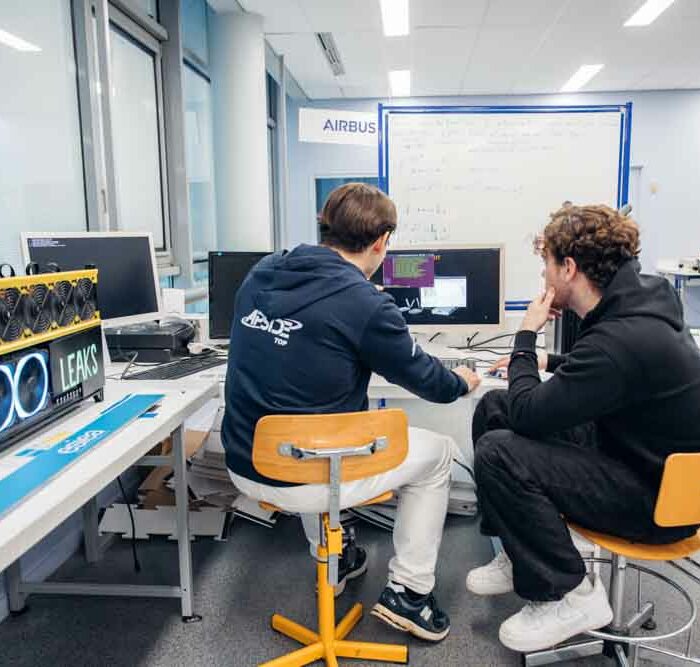
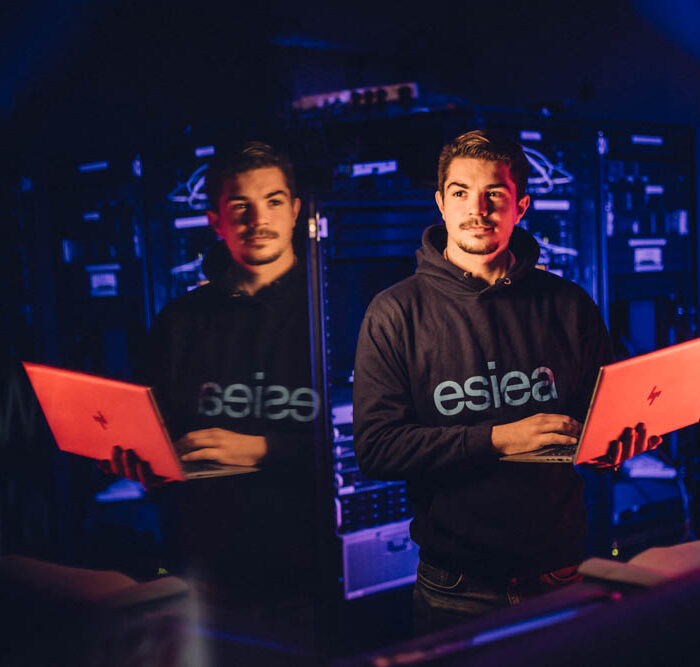

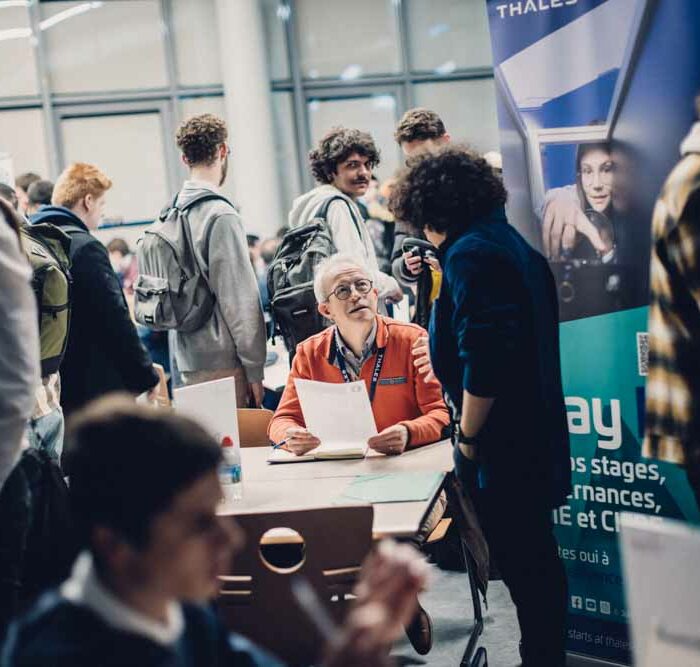


Dual focus

Cutting-edge technologies

Professional Certification

Hands-on Experience

Networking opportunities

Study trip
Program Curriculum
From information systems management to logistics, customer relations, and human resources, data is everywhere and waiting to be analyzed. Managers need an analytical and scientific approach to understand the algorithms they work with in order to interpret and communicate data effectively to stakeholders and colleagues.
Our program aims to train these future managers by ensuring they acquire all the skills needed to understand, use, and develop AI-based visualizations and algorithms. Thanks to this unique and specialized curriculum, students are able to deliver innovative, technical solutions to the challenges faced by the business world.
This program enables future engineers and managers to develop dual expertise and gain international experience. They will build strong teamwork abilities, interpersonal skills, curiosity, project-based experience, and a strong capacity to solve technical problems and manage AI-driven projects.

Testimonial
Career opportunities
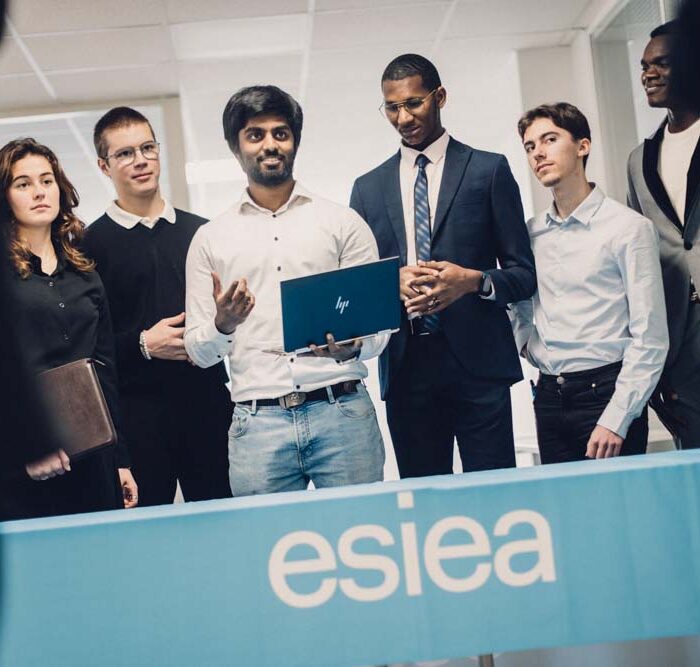


Career Paths

Recruiting Companies

Strong employability and competitive salary
Who can apply?

This one-year MSc program is open to ESIEA students holding at least a four-year higher education degree.

Each annual intake is limited. ESIEA encourages prospective candidates to apply as early as possible.
Apply
You can apply by completing the form in English by clicking the button below:
Would you like to learn more about our exchange programmes?
Frequently asked questions
Which Master’s degree should you choose to work in artificial intelligence?
To work in artificial intelligence, it is recommended to pursue a Master’s degree that provides a strong foundation in mathematics, algorithms, data science, and machine learning, complemented by a practical approach to developing and deploying AI models. Programs that include real-world projects, applied work, and potentially work-study opportunities are particularly well suited.
At ESIEA, the Advanced Master’s in AI Engineering and Applications meets these requirements by combining a solid scientific foundation, intensive hands-on practice, and professional experience, enabling fast access to careers in AI.
Why pursue a Master’s degree in artificial intelligence?
A Master’s degree in artificial intelligence provides advanced expertise in machine learning, data science, and the design of intelligent systems skills that are highly sought after by companies today. This type of program opens access to specialized, high-value roles while offering strong career growth opportunities.
At ESIEA, the Advanced Master’s in AI combines a solid scientific foundation, intensive hands-on practice, and work-study opportunities, enabling rapid skill development that can be directly applied in a professional environment.
What are the new careers in artificial intelligence?
The rise of artificial intelligence is creating new specialized roles, including AI engineer, machine learning engineer, data scientist, data engineer, AI solutions architect, generative AI expert, intelligent automation specialist, and AI ethics and governance analyst.
These roles require advanced skills in data processing, machine learning, model deployment, and an understanding of technical and ethical challenges. Specialized programs such as ESIEA’s Advanced Master’s in AI Engineering and Applications prepare students for these high-responsibility roles.
What are the main responsibilities of an AI systems expert?
An AI systems expert designs, develops, and optimizes models capable of analyzing data, making automated decisions, or assisting users. Their responsibilities include data preparation and processing, algorithm selection, model training and evaluation, and deployment in operational environments.
They also ensure the performance, security, and ethical use of the systems implemented. Thanks to specialized programs such as those offered at ESIEA, these experts are able to transform business challenges into concrete and effective AI solutions.